NRI Guide to Buying Property in Chennai

NRI guide to buying property in Chennai explains the property rules under Section 31 of the Foreign Exchange Management Act (FEMA), which lets Non-Resident Indians (NRIs) and Overseas Citizens of India (OCIs) buy residential or commercial homes across Tamil Nadu without needing prior Reserve Bank of India (RBI) approval, while paying an 11% state registration charge (7% stamp duty plus 4% registration fee). This clear rule helps you buy your own home, check title records on the Tamil Nadu state website (TNREGINET), and pick safe flats approved by TNRERA.
You have to pay for your home through a bank using your NRE, NRO, or FCNR account, as the law does not allow cash. If the house costs more than ₹50 lakh and you buy it from an Indian resident, keep back 1% tax before you give them the money. If you live abroad, you do not need to fly down; just sign a power of attorney at the Indian embassy. Once your lawyer or family gets it stamped in Chennai, they can sign the final papers for you anywhere on OMR, GST Road, or the 200 Feet Radial Road.
FEMA Regulations and Land Ownership Rules for NRIs in Chennai
FEMA rules split Indian real estate into simple allowed and banned groups for buyers living abroad. Under RBI rules, you can buy as many flats, villas, and shops as you want, but you cannot buy farmland, village plots, or tree groves.
- Allowed Properties: You can buy flats, standalone houses, and office units anywhere in Chennai.
- Banned Properties: You cannot buy farmland or crop plots unless a resident Indian leaves it to you in a family will.
- TNRERA Checks: RERA rules make builders share clear building plans, fix set handover dates, and put 70% of project money into a separate bank account.
- Checking Title Papers: You should get a 30-year Encumbrance Certificate (EC) online through TNREGINET to check that the land has no bank loans or legal fights.
TNREGINET Registration and Power of Attorney Procedures for NRIs
Buying a home in Chennai follows a clear paper process that ends with signing the sale deed at the local Sub-Registrar Office (SRO). If you cannot travel to Chennai, you can sign a Power of Attorney (POA) through your nearest Indian Embassy or local public notary.
- Signing a POA Abroad: Pick a trusted family member or friend in India and sign a Special POA in front of an Indian Consulate officer.
- Stamping the POA in Chennai: Once the paper reaches India, your person must get it stamped at the local District Registrar office within three months.
- Sale Agreement Steps: Signing the first builder-buyer agreement carries a 1% state fee under Tamil Nadu registration rules.
- Final Sub-Registrar Signing: Your POA holder visits the sub-registrar office to sign the final sale deed, and the state updates the new owner's name on TNREGINET.
Banking Routes and RBI Fund Repatriation Guidelines for NRIs
All property payments in India must be made through regular bank transfers from abroad. Payments using cash, traveller’s cheques, or third-party money handlers are not allowed.
- NRE Bank Accounts: Use this account to send your foreign salary into India, and you can freely move all your money and sale profits back abroad.
- NRO Bank Accounts: Use this account to collect money made inside India, like house rent, and you can send up to $1 million USD abroad each year.
- Home Loan Options: Major Indian banks give home loans for up to 80% of the flat price if you show your foreign pay slips and bank statements.
- Paying Your Home Loan: You must pay your monthly loan installments with funds from your NRE or NRO account, or using rent money earned in India.
Stamp Duty, Registration Charges, and TDS on Property Purchases in Chennai
Buying a property in Chennai brings an 11% government fee, which includes 7% stamp duty and 4% registration fees based on the deal price or the state guideline rate, whichever is higher. Buyers must also deduct tax at source on larger property deals.
| Cost or Tax Head | Rate to Pay | Plain Rule |
|---|---|---|
| Stamp Duty | 7.0% | Paid to Tamil Nadu government on the home value |
| Registration Charge | 4.0% | Paid to TNREGINET to record your sale deed |
| Sale Agreement Duty | ₹20 + 1% fee | Standard fee to register the build agreement |
| TDS on Indian Resident Seller | 1.0% | Cut if the flat price is over ₹50 Lakh |
| TDS on NRI Seller | 20% + Surcharge | Cut on capital gains if the seller lives abroad |
If you keep your flat for more than 24 months before selling, your profit counts as a long-term capital gain. Under Section 54, you can save this tax completely by using your profit to buy another home in India within set time limits.
TVS Emerald Avalon: Strategic South Chennai Investment for NRIs
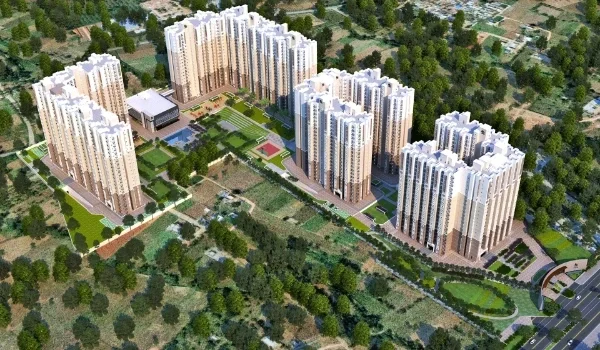
TVS Emerald Avalon is a new residential community spread across 12.44 acres on the Pallavaram–Thoraipakkam 200 Feet Radial Road, featuring 1,035 apartments across 10 high-rise towers rising 2 Basements + Ground + 15 Floors. It gives overseas buyers a clean, RERA-approved layout, solid build quality, and a safe buying path in South Chennai.
Strategic Location and Urban Connectivity
The project sits right on the 200 Feet Radial Road, letting you drive to Chennai International Airport in 20 minutes and reach the OMR tech belt in 15 minutes. It is only 10 minutes away from the upcoming Echangadu Metro Station on Chennai Metro Phase II. This spot makes it very easy to find tenants among office workers from DLF Cybercity, Olympia Tech Park, and nearby IT parks.
Configurations and Investment Profile
TVS Emerald Avalon has a 34,061 sq. ft. clubhouse and 27 outdoor amenities. Around 80% of the 12.44-acre site is kept open for green spaces. The project offers 2 BHK homes from 965 to 1,245 sq. ft., starting at ₹1.2 Crore, along with 3 BHK homes from 1,540 to 1,700 sq. ft. and 4 BHK duplex homes up to 2,590 sq. ft. Built by the 113-year-old TVS Group, the project plans to start handovers by 2029. Expected rental returns are around 3.5% to 4.2% per year.
Prime Real Estate Corridors in Chennai for NRI Investors
Chennai has clear property pockets built along major highways, IT offices, and job centers that keep tenant demand strong year-round.
- OMR (Old Mahabalipuram Road): The main tech highway from Sholinganallur to Siruseri, giving landlords steady monthly rent and low vacancy.
- GST Road (Grand Southern Trunk): Near the airport, this area is packed with car plants, aerospace parks, and logistics firms that drive steady land prices.
- 200 Feet Radial Road: A prime link road between GST Road and OMR, known for wide lanes, fresh roads, and large modern townships.
- ECR (East Coast Road): Chennai's scenic beach drive, popular for luxury beach houses, weekend homes, and high rental earnings.
Due Diligence Checklist for NRIs Buying Property in Chennai
Checking your property papers early keeps you safe from delays, boundary fights, and bad titles.
- Check Sanction Plans: Make sure the builder has stamped approval letters from CMDA or DTCP.
- Review the Patta: Check state land books to see that the seller's name matches the Patta, Chitta, and Adangal.
- Ask for Handover Papers: Confirm the builder has an official Completion Certificate (CC) before paying the last installment.
- Inspect RERA Bank Accounts: Check that 70% of all flat buyer money goes straight into the project's official TNRERA bank account.
FAQs
Under FEMA and RBI rules, NRIs and OCIs cannot buy farmland, village plots, or tree farms in India. You can only own farmland if a resident Indian relative leaves it to you as an inheritance.
You pay an 11% state fee in Chennai, made up of 7% stamp duty and 4% registration charges. These fees are calculated on the sale price or the state guideline value, whichever is higher.
An NRI can sign a Special Power of Attorney (POA) on plain paper in front of an Indian Consulate officer or a notary public abroad. Your family member in India must get this paper stamped at the local District Registrar's office within three months.
TVS Emerald Avalon has 2 BHK homes starting at ₹1.2 Crore (965 to 1,245 sq. ft.), 3 BHK homes (1,540 to 1,700 sq. ft.), and large 4 BHK duplex units up to 2,590 sq. ft. along the 200 Feet Radial Road.
Yes, you can send rent money from your NRO bank account abroad up to $1 million USD each financial year after paying your Indian taxes. You just need to file Form 15CA online and get a Form 15CB certificate from a Chartered Accountant.